AI Policy & Practice Forum

Join the Rockefeller Institute of Government and the University at Albany’s AI & Society Research Center for a forum on AI policy and practice.

Artificial intelligence is increasingly embedded in the systems that shape institutions, decision-making, and public life. Conversations about its development and governance are advancing rapidly across academia, government, and industry, but often without meaningful synthesis across these areas.

This full-day forum is designed to engage across those domains. Featuring a curated program of panel discussions, research presentations, and networking opportunities, the event brings together researchers, policymakers, and practitioners working on AI in health, education, governance, and ethics for an engaging, action-guiding discussion.

The program is designed to strengthen connections between research, policy, and implementation, supporting more coherent and effective approaches to how AI is developed, governed, and used.

Schedule

  • 9:00 AM – 9:30 AM

    Registration
    Check in in the lobby then come up to 2nd floor and enjoy some coffee and tea.
  • 9:30 AM – 9:45 AM

    Housekeeping & Welcome
    Rockefeller Institute Director of Research Laura Rabinow will go over some housekeeping notes and offer brief remarks to set the stage for the day.
  • 9:45 AM – 10:55 AM

    Panel 1 | State and Local Government AI Policy/Practice

    The Mirror of Accountability: A Lifecycle Rubric for Internal AI Governance – How Do U.S. State Governments Govern the Use of Artificial Intelligence Within Their Own Operations?

    • Sky Suwanraksa, Richard P. Nathan Public Policy Fellow, Rockefeller Institute of Government

    Expanding Existing Policy Frameworks To Support Risk-Managed Use of AI

    • Chris Stanley, CISSP, Director of Cyber Strategy and Risk and Director of Research Technology, New York State Office of Mental Health (OMH)

    From Pilots to Policy: Responsible AI for Public Transit & City Services in the Capital Region

    • Derek Werthmuller, Director of Technology Innovation and Services, Center for Technology in Government, University at Albany

  • 11:10 AM – 12:10 PM

    Panel 2 | AI Risks and Ethical Challenges

    Clouds, Cables, and Megawatts: States and Localities Grapple With the Data Center Boom

    • Mathilda Scott, Policy Analyst, Rockefeller Institute of Government

    The AI Catch-22: Negotiating Tensions Between Individual Privacy and Comprehensive Training Data for GenAI Models

    • Archana Krishnan, Associate Professor of Communication, College of Arts and Sciences, University at Albany

    AI As Digital Blackface: Beyond Representation — Racialized AI, Stereotypes, and Policy Imperatives for Equity

    • Jugba Santi, Policy Advisor, Empire State Development

    Accountability in the Age of AI-Based Automated Decision-Making: Identifying the Risks and Recommending Ways To Address Them

    • Mila Gasco-Hernandez, Research Director, Center for Technology in Government and Associate Professor, Department of Public Administration and Policy, Rockefeller College of Public Affairs & Policy, University at Albany

  • 12:10 PM – 1:00 PM

    Keynote Luncheon | NYS Chief AI Officer Eleonore Fournier-Tombs
    Enjoy a complimentary lunch with fellow attendees and presenters and listen to a keynote presentation from New York State’s Chief AI Officer, Eleonore Fournier-Tombs.
  • 1:00 PM – 2:10 PM

    Panel 3 | AI and Health Policy/Practice

    Creating a Healthcare-Focused Artificial Intelligence Public-Private Platform for New York State

    • Sally Dreslin, Executive Director, Step Two Policy Project

    Does Artificial Intelligence Improve Performance in Public Service Delivery? Evidence From U.S. Hospitals

    • Ohbet Cheon, Richard P. Nathan Public Policy Fellow, Rockefeller Institute of Government; Assistant Professor, Department of Health Policy, Management & Behavior, University at Albany

  • 2:25 PM – 3:35 PM

    Panel 4 | AI and Education Policy/Practice

    The European AI Act and the Limits of Comprehensive Technological Regulation

    • Jasmin Cowin, Richard P. Nathan Public Policy Fellow, Rockefeller Institute of Government; Associate Professor, Touro University

    From Policy to Practice: Building Regional Capacity for Responsible AI Governance in Public Education

    • Ashley Gardiner Gilson, Managing Director, ILO Group

    Integrating ChatGPT Into Secondary Mathematics Education Coursework at the Graduate and Undergraduate Level

    • Theresa Gurl, Associate Professor of Mathematics Education, Department of Secondary Education and Youth Services, Queens College, CUNY

    Evaluating AI Tutoring in STEM Education: Student Feedback, Performance Outcomes, and Implications for Ethical AI Design

    • Cecilia Bibbò, Visiting Assistant Professor, Department of Educational Policy & Leadership, School of Education, University at Albany

  • 3:35 PM – 3:40 PM

    Closing Message
    Final remarks.
  • 3:40 PM – 4:30 PM

    Final Networking
    Take some time to connect with fellow attendees and presenters and reflect on the day’s presentations.

Keynote Speaker

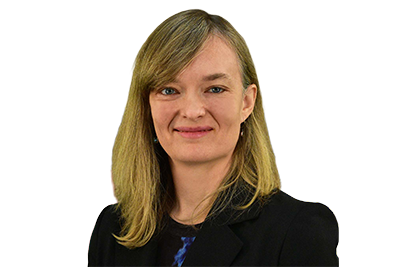
Eleonore Fournier-Tombs

Eleonore Fournier-Tombs

Chief Artificial Intelligence Officer, New York State Office of Information Technology Services

Dr. Fournier-Tombs brings more than 15 years of global AI, data governance, technology innovation, and digital transformation experience to her role as chief AI officer. Most recently, she served as head of anticipatory action and innovation and senior researcher for United Nations University, where she founded and led the UN’s first AI policy research lab and directed governance and lifecycle management of predictive analytics and AI systems to support crisis forecasting.
Read More

Panelists

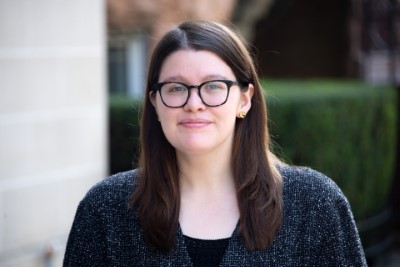
Sky Suwanraksa

Sky Suwanraksa

Richard P. Nathan Public Policy Fellow, Rockefeller Institute of Government

Sky Suwanraksa is an AI practitioner and technologist with 15+ years of experience mastering emerging technologies to drive impact. A former Apple Genius, she bridges technical fluency and human-centered design, demystifying complex tools and turning them into accessible resources. Sky founded Capital Region AI Catalyst, a nonprofit democratizing AI through education and collaboration, and serves on the NYS AI Forum Steering Committee, advocating for ethical, community, and workforce-focused AI strategies. Her work focuses on turning curiosity into capability, helping individuals and institutions adapt to AI with confidence. In the absence of a broader federal AI policy framework, Suwanraksa will examine state-level policies and legislation related to the use of AI, and the different regulatory models employed therein.

Read More
Cecilia Bibbò

Cecilia Bibbò

Visiting Assistant Professor, Department of Educational Policy & Leadership, School of Education, University at Albany

Dr. Cecilia Bibbò is a visiting assistant professor in the Department of Educational Policy & Leadership at the University at Albany’s School of Education. Prior to this role, Dr. Bibbò served as an evaluator at the Italian Quality Assurance Agency and as a research project officer at the Italian Ministry of Education. As an expert in higher education evaluation, she played a key role in assessing the quality and effectiveness of higher education institutions and programs across Italy, with a particular focus on performing and fine arts institutions and programs. In 2022, she was selected as a Council for Higher Education Accreditation Fellow, further enhancing her expertise in international higher education quality assurance.

With over a decade of experience, Dr. Bibbò has actively contributed to educational research and has served as a member of various European and international committees dedicated to enhancing the quality of higher education. Her research interests include accreditation policies and procedures, comparative higher education, and international cooperation aimed at improving educational quality on a global scale.

Dr. Bibbò earned her Ph.D. in educational policy and leadership from the University at Albany, SUNY, and holds both a bachelor’s and a master’s degree in mathematics from the University of Siena, Italy.

Read More
Ohbet Cheon

Ohbet Cheon

Richard P. Nathan Public Policy Fellow, Rockefeller Institute of Government; Assistant Professor, Department of Health Policy, Management & Behavior, University at Albany

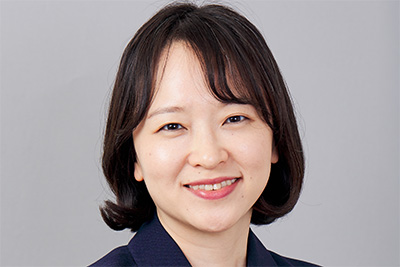
Ohbet Cheon is an assistant professor in the Department of Health Policy, Management & Behavior at the University at Albany. She received her PhD in political science from Texas A&M Universityc and her master’s in public administration and public policy from Seoul National University (South Korea). With a robust background in public policy and healthcare management, her work focuses on how healthcare organizations adopt innovations in response to policy changes and performance feedback. She is also interested in assessing health disparities and in designing, implementing, and evaluating health services interventions. She has published in Health Services Research, American Journal of Medical Quality, Population Health Management, International Public Management Journal, Public Management Review, and other leading journals. Prior to joining the University at Albany, she served as an assistant professor of healthcare management at Clarkson University and as a postdoctoral fellow at the Houston Methodist Research Institute and the NSF Center for Health Organization Transformation.

Read More
Jasmin Cowin

Jasmin Cowin

Richard P. Nathan Public Policy Fellow, Rockefeller Institute of Government; Associate Professor, Touro University

Dr. Jasmin (Bey) Cowin, associate professor at Touro University, is the recipient of the Touro University CETL Faculty Fellowship (2024). A Fulbright Scholar and SIT Graduate, she was selected as a 2024 US Department of State English Language Specialist. Her extensive expertise in artificial intelligence in education is further highlighted by her role as an AI trainer and former education policy fellow (EPFP™) at Columbia University, Teachers College. As a columnist for Stankevicius, she writes on Nicomachean Ethics – Insights at the Intersection of AI and Education. She has contributed to initiatives such as Computers for Schools Burundi, served as a resource specialist for Amity University in Uttar Pradesh, India, and participated in TESOL “Train the Trainer” programs in Yemen and Morocco. Her research interests encompass simulation use cases for educators-in-training, AI applications in education, metaverses, and distributed ledger technologies, focusing on “Education for 2060.”

Read More
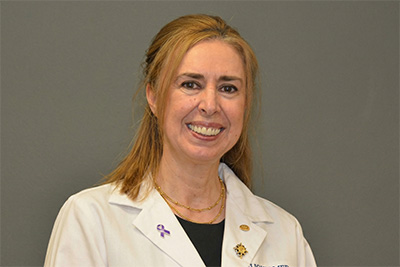
Sally R. Dreslin

Sally R. Dreslin

Executive Director, Step Two Policy Project

Sally Dreslin began her clinical nursing career in the mid-1990’s at St. Vincent’s Hospital in New York City. She went on to work in a variety of clinical settings, including as a Flight Nurse in the US Air Force Reserve. Dreslin was a certified emergency nurse and was also a certified EMT, working on a volunteer ambulance corps. She transitioned to work as a hospital-based nurse educator and taught topics in critical care. She then worked for the New York State Nurses Association focusing on nursing education, health and workforce policy, and government affairs.

In 2013, Dreslin entered New York State government as the assistant secretary for health in the Governor’s Office and in late 2014, she became the executive deputy commissioner at the Department of Health. After five and a half years, Dreslin transitioned to the Office of Mental Health and served as the director of operations in the Office of the Chief Medical Officer until late 2022.

Dreslin is currently the executive director of the Step Two Policy Project, a think tank focused on issues involving health, behavioral health, and human services in New York. Dreslin’s focus areas include topics in rural health, health data transparency and information exchange, school-based health centers, the healthcare workforce, and government efficiency.

In addition to her work with Step Two, Dreslin serves on the NYS State Board for Nursing and the State Emergency Medical Services Council.

Read More
Ashley Gardiner Gilson

Ashley Gardiner Gilson

Managing Director, ILO Group

Ashley has significant experience in program management and design that spans across a range of cradle-to-career efforts, both domestically and internationally.

Prior to joining ILO Group, Ashley served as the senior advisor for an international NGO where she oversaw the launch of career and technical education programs for underserved adults, including migrants and refugees, with a specific focus on accelerating opportunities for women. Domestically, Ashley has supported various education-to-career initiatives. At the Council for Chief State School Officers, she managed the New Skills for Youth initiative, which aimed to transform education-to-career pathways in 10 states. At America Achieves, Ashley led the labor market analysis on behalf of the organization’s university and industry partners to develop prototypes for credit-bearing, nondegree pathways that accelerate people into high-demand, high-opportunity jobs with family-sustaining wages.

Ashley earned a bachelor’s degree in sociology and dance performance from Elon University and a master’s in public policy from Duke University.

Read More
Mila Gascó-Hernandez

Mila Gascó-Hernandez

Research Director, Center for Technology in Government and Associate Professor, Department of Public Administration and Policy, Rockefeller College of Public Affairs & Policy, University at Albany

Mila Gascó-Hernandez is the research director at the Center for Technology in Government and an associate professor in the Department of Public Administration and Policy at the Rockefeller College of Public Affairs & Policy at the University at Albany. Before joining the University at Albany, Dr. Gascó served as a senior researcher at the Institute of Governance and Public Management (currently known as ESADEgov—Center for Public Governance) and the Institute of Innovation and Knowledge Management, both at ESADE Business & Law School in Spain. Prior to that, she was a senior analyst at the International Institute on Governance of Catalonia and a professor at the Rovira Virgili University and the Pompeu Fabra University, both in Spain.

Mila has considerable consulting experience in the areas of information and knowledge society. In this respect, she has worked for a wide variety of organizations such as the United Nations Development Program, the Mayor’s Office in Valencia (Venezuela), the Spanish Agency for International Development Cooperation, the City Council and the Provincial Council of Barcelona, the International Institute for Democracy and Electoral Assistance, the Latin American Centre on Management for Development (for whom she codeveloped the Ibero-American Interoperability Framework), the World E-Governments Organization of Cities and Local Governments (she was the leading judge for the WeGo Awards), the Inter-American Development Bank, and Google.

Her areas of research are mainly related to information and technology in government, and, among others, they include electronic and open government, e-governance, public sector innovation, smart cities, telework, and artificial intelligence in government.

Dr. Gascó holds an MBA and a Ph.D. in public policy evaluation. She was awarded the Enric Prat de la Riba award for the best Ph.D. thesis on public management and administration, given by the School of Public Administration of Catalonia in Barcelona, Spain.

Read More
Theresa J. Gurl

Theresa J. Gurl

Associate Professor of Mathematics Education, Department of Secondary Education and Youth Services, Queens College, CUNY

Theresa J. Gurl, Ph.D., is an associate professor of mathematics education in the Department of Secondary Education and Youth Services at Queens College, CUNY. She has taught undergraduate and graduate courses in education and mathematics, including methods of teaching mathematics, curriculum and assessment, and research in secondary mathematics. Her research and publication focus on mathematics teacher preparation, with particular interest in preservice teacher interactions with cooperating teachers, issues related to educational policy, how best to support teachers in taking pedagogical risks, and the use of generative AI with secondary mathematics teachers. Dr. Gurl has presented in these areas at national and international conferences. In addition to her teaching and research, Dr. Gurl mentors preservice and in-service teachers and is committed to preparing mathematics teachers who are reflective, innovative, and responsive to the evolving needs of their students and the field. She also serves as an associate editor for the NCTM journal Mathematics Teacher: Learning and Teaching Pre-K–12 and served on the editorial panel of the math section of the AACE journal Contemporary Issues in Technology and Teacher Education (CITE-Math).

Read More
Archana Krishnan

Archana Krishnan

Associate Professor of Communication, College of Arts and Sciences, University at Albany

Dr. Archana Krishnan is an associate professor of communication in the College of Arts and Sciences at the University at Albany. She is also an affiliate faculty member in the College of Emergency Preparedness, Homeland Security and Cybersecurity’s Department of Information Science and, more recently, a member of the Engaged Researchers Working Group. She received her Ph.D. in communication sciences from the University of Connecticut with a specialization in computer-mediated communication, followed by a postdoctoral fellowship from Yale University in mobile health (mHealth). Her expertise is in communication sciences with an emphasis on communication technology and new media. This is complemented by advanced training in quantitative methodology, including multiple regression, longitudinal data analysis, and structural equation modeling.

Dr. Krishnan’s research is grounded in health communication, computer-mediated communication, mHealth, and global public health. One of her key interests is to examine how mobile technologies can be leveraged to improve and maintain favorable health behaviors, e.g., medication adherence, in underserved populations. She has presented at several national and international conferences and has published in Information, Communication and Society, Journal of Health Communication, Journal of Applied Communication Research, Mobile Media and Communication, Computers in Human Behavior, PLoS ONE, AIDS and Behavior, and Health Communication. She was recognized as a mHealth scholar at the prestigious 2016 NIH/UCLA mHealth Training Institute, and has received research grants from the National Institute on Drug Abuse, National Institute of Mental Health, and Bristol-Myers Squibb.

Read More
Jugba Santi

Jugba Santi

Policy Advisor, Empire State Development

A native of Bronx, New York, Jugba began her career as a communications specialist for the New York State Senate. She has previously worked as an intergovernmental affairs analyst for the New York City Taxi and Limousine Commission, as well as a borough planner with the New York City Department of Transportation. She was also a 2017 New Leaders Council Fellow in the New York City Chapter. For several years, she resided in South Florida, where she worked on transportation policy and agency coordination with the City of Fort Lauderdale.

Jugba relocated to Albany in 2023, and she currently works as a policy advisor for the Empire State Development, where she helps to craft innovative policy ideas to help promote economic development throughout New York State. Jugba is a proud member of Delta Sigma Theta Sorority, Inc., a historically African-American sorority committed to public service. Additionally, she is a member of the Junior League of Albany.

Jugba holds a Master of Science (M.S.) in urban policy analysis and management from the Milano School of International Affairs, Management and Urban Policy at The New School. She received a Bachelor of Arts (B.A.) from the University at Albany with a double major in political science and Africana studies.

Read More
Mathilda Scott

Mathilda Scott

Policy Analyst, Rockefeller Institute of Government

Mathilda Scott serves as a policy analyst at the Rockefeller Institute focusing on environmental and health policies and supporting the Institute’s broad range of research topics. She holds a BA from Mount Holyoke College and an MS from the University of Utah and continues to pursue a PhD in sociology. Previously, she worked at the USDA Rural Development in affordable housing.

Read More
Chris Stanley

Chris Stanley

CISSP, Director of Cyber Strategy and Risk and Director of Research Technology, New York State Office of Mental Health (OMH)

Chris Stanley is the director of cyber strategy and risk and director of research technology at the New York State Office of Mental Health (OMH). Chris handles business compliance and security for OMH, acting as the agency’s cyber risk coordinator and liaison with New York State IT information security teams. In addition, Chris leads technical, architectural, and strategic initiatives for the agency with both the New York State Office of Information Technology Services and third-party service providers. Chris also maintains OMH internal security policies and standards, and cybersecurity education efforts. Areas include data classification, privacy, and technology risk management, including managing AI tools. As the director of research technology, Chris supports OMH’s research institutes in architecting and developing AI/ML and scientific computing solutions, including infrastructure and services providing traditional and generative AI platforms and technologies.

Read More
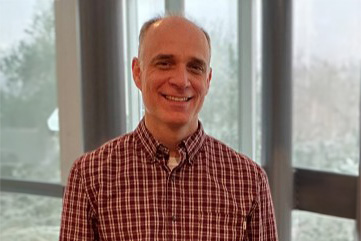
Derek Werthmuller

Derek Werthmuller

Director of Technology Innovation and Services, Center for Technology in Government, University at Albany

Derek Werthmuller is the director of technology innovation and services at the Center for Technology in Government at the University at Albany, SUNY (CTG UAlbany). Werthmuller is responsible for researching, prototyping, and implementing innovative and sustainable technology solutions with government partners.

During more than 30 years at CTG UAlbany, Werthmuller has championed emerging technologies such as XML frameworks and XML databases for web content management, systems management, and more. He has led initiatives in visualization, blockchain, the Internet of Things, data management and analysis, and, more recently, artificial intelligence development, including the evaluation and prototyping of AI-enabled tools and solutions. He was also responsible for directing CTG UAlbany’s technology transfer program within the university to bring the center’s innovative products to a greater market.

Werthmuller brings strong practical experience in automating system management and system deployment, and evaluating sustainable software solutions. Academically, Werthmuller spearheads CTG UAlbany’s Student Technology Innovations Lab Experience (STILE) program, providing UAlbany students with practical experiential learning opportunities.

Read More