Download Report
April 30, 2026
AUTHORS
Laura Rabinow
Mathilda Scott
Francis Ofori-Awuku
Executive Summary
New York State faces challenges with its aging dam infrastructure. Dams in the state are an average of 87-years-old, over 20 years older than the national average, and a growing number of dams in New York are classified as high hazard or in poor condition. Climate change and increasingly extreme weather events have intensified both the safety risks of aging dams and the urgency of addressing dam infrastructure.
While there has been growing consensus on, and funding to address, the risks and impacts of dam infrastructure, challenges remain—particularly when it comes to removing dams. Recent research has further reflected important shifts in how dam removal, modifications, and decisions around them are being made. These shifts include greater attention to ecological restoration as a driver for dam removals and modifications (or retrofitting). They also demonstrate that most dam removals in the Northeast are being conducted on small dams (under five meters) and at much lower relative costs. These shifts suggest there are significant potential opportunities for expanding cost-effective river ecosystem restoration efforts in New York, particularly as the state has approximately 6,000 dams, with the average height of a dam in the state being just under 15 feet.
Given the human safety, economic, and ecological factors, it may not be surprising that dam removal or decommissioning rates have been on the rise, and that many owners of dams have sought to decommission, modify, or divest from them. It may also not be surprising that New York has taken steps over the last 25 years to clarify and improve its regulatory oversight, and that both the state and federal government have committed funding towards dam repair, modification, and removal in recent years. While there has been growing consensus on and funding to address the risks and impacts of dam infrastructure, there have also been challenges—particularly when it comes to decommissioning or removing dams.
This report examines the history and current landscape of dams in New York and the current state of removal and modification policies through stakeholder interviews in order to identify opportunities for further improvement.
Between late summer and early fall 2025, we conducted semi-structured interviews with dam owners, engineers, nonprofit staff, and regulatory staff engaged in dam removal and modification projects across New York and in other states. These conversations revealed systematic challenges and opportunities to improve dam removal and modification policy and practice in New York.
- Personnel Capacity. While state agency staff in New York currently perform key roles related to dam removals, establishing a dedicated and centralized team of staff working on dam removals could increase project coordination, institutional knowledge, and process consistency statewide. States with dedicated teams of agency staff members working on dam removal, such as Massachusetts, have reported a higher rate of completed dam removal and modification projects compared to New York.
- Removals and Ecological Benefits. Current regulatory frameworks inadequately account for the ecological benefits of dam removal and the environmental harms of leaving dams in place. Many of New York’s bedrock dam regulations predate the broader integration of ecological restoration approaches, such that permitting frameworks often focus primarily on preventing construction-related harm and do not weigh or balance considerations about the restoration benefits of a project. The state therein considers removals as one option for addressing cases of dam safety, but does not prioritize it. Other states, however, that prioritize or more actively promote dam removals and modification as part of ecological restoration efforts, have consequently seen a greater rate of sites addressed.
- Project Management and the Role of Nonprofits. Individual and small-organization dam owners described project management as an overwhelming “second job” requiring coordination across multiple agencies, navigating funding sources, and multiyear timelines. Nonprofit organizations play indispensable roles in the current system as educators and advocates for dam removals, connectors between owners and technical/funding resources, providers of project management services, and sources of ecological and regulatory expertise. However, given current resources and technical capacity, nonprofits have to make choices between projects, leaving some owners without sufficient support and resulting in further project challenges and missed opportunities for restoration efforts. Additionally, dam owners consistently operate with incomplete information about the actual project duration (projects take far longer than initially expected), available funding sources and typical cost ranges, and all the agencies and offices that will need to be involved. This lack of comprehensive education from the outset means that critical decisions are often made without full understanding.
- Interagency and Intergovernmental Coordination. Dam owners seeking to remove their structures must navigate multiple agencies at the federal, state, and local levels, including DEC, State Historical Preservation Office (SHIPO), US Army Corps of Engineers, and local governments, sometimes with conflicting requirements and little coordination. Late-involvement of additional agencies or offices can also require additional costly design changes and project delays. Stakeholder experiences reflected that existing pre-application conferences fail to consistently produce meaningful alignment, leaving owners to coordinate across offices and processes themselves, and sometimes learning of additional requirements well into the design phase that could have been addressed earlier.
- Historical Preservation. Stakeholders noted that, in their experience, dam removal projects face challenges with respect to historic preservation requirements that are sometimes in tension with ecological restoration efforts. Some of them further noted that while preservation can bring cultural benefits, it was not considered alongside or balanced with respect to the benefits of ecological restoration. Stakeholders also repeatedly contextualized dam sites in longer ecological and cultural timeframes. They raised that while some dams are on the order of 100-years-old, Indigenous communities have existed in New York for thousands of years and some river systems have existed for hundreds of thousands if not millions of years and do not always receive the same consideration in existing processes.
- Funding Accessibility and Timing. As noted with respect to broader project management challenges, dam owners face barriers to funding—including complex and unfamiliar application processes, requirements for upfront costs before grants are awarded, and timing mismatches between funding availability and project timelines (that sometimes, if not often, shift). Consequently, many small entities and individual owners lack the capacity to navigate many of these funding complexities and may be deterred from removal projects, experiencing high unexpected costs and creeping timelines.
- Sediment Testing and Management. Sediment management consistently emerged as a challenge during dam removal projects. Dams trap sediment that rivers transport naturally. During dam removal projects, there are concerns about releasing potentially contaminated or polluted sediment downstream, and these concerns, understandably, inform regulatory approaches in both policy and practice. Stakeholders, however, reported a lack of clear standardized guidance around testing and management and regulatory uncertainty, even in cases with relatively low related risk that increased project timelines, costs, and complicated the forward movement of projects.
- Community Engagement. Community responses significantly influence project outcomes in stakeholder experiences. They noted that nonprofits and other stakeholders may not prioritize, choose to pursue, or continue involvement with projects based on the tenor of community response. Communities, understandably, often have strong attachments to ponds and lakes created by dams, valuing them for recreation and aesthetics, and sometimes economic benefits. These features are also often perceived as “natural” features, even though they are human-made. Additionally, construction impacts such as noise, road closures, and increased turbidity can inform community concerns, as can fear of the unknown post-removal, despite ecological benefits and potential new recreation, aesthetic, or economic benefits. Particularly, if there is not sufficient community engagement to set expectations, outline benefits, and create meaningful avenues for continued communication.
Read the full report.
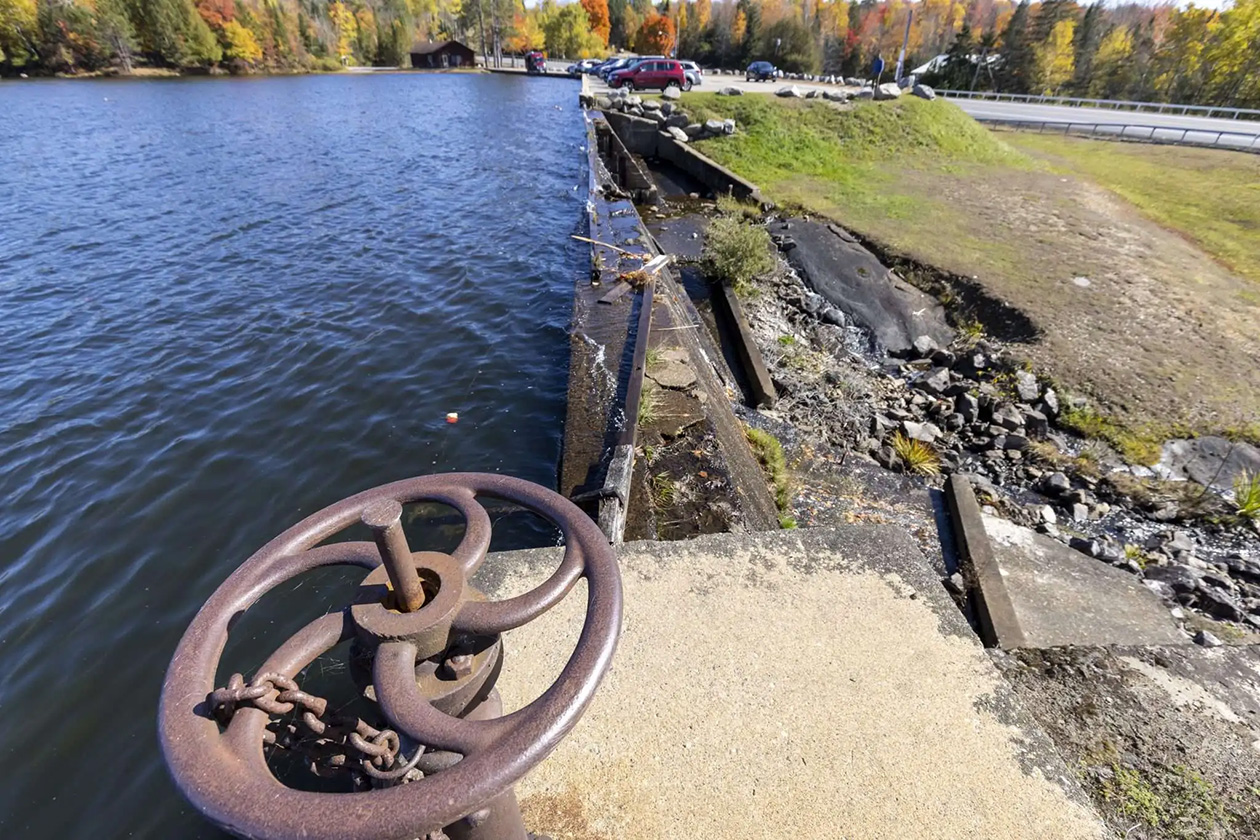
Header photo credit: Mike Lynch, https://www.adirondackexplorer.org/environment/a-look-at-the-riskiest-dams-in-the-adirondacks/