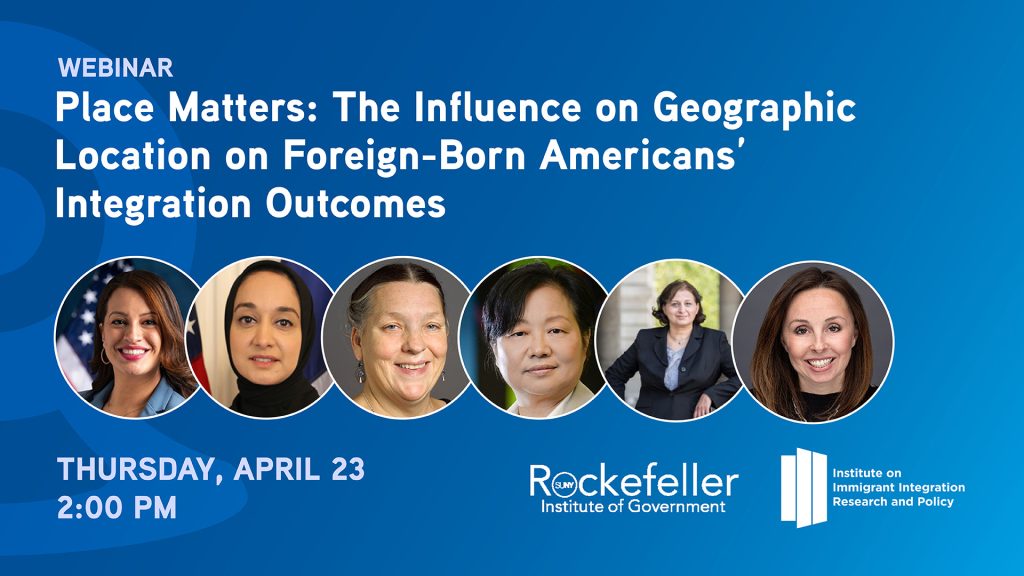
Place Matters: The Influence of Geographic Location on Foreign-Born Americans’ Integration Outcomes

Geographic location shapes labor market conditions and can restrict or expand the opportunity structure available to foreign-born Americans. Residing in urban versus rural areas can provide greater access to diverse job markets, ethnic networks, and services. While rural areas may offer fewer opportunities and support systems. Local economies within robust job markets can influence the type of work available to immigrants and shape long-term economic mobility. The local socio-political climate affects whether immigrants feel welcome. Policies that are friendly or hostile shape opportunity structures. The context of reception and the attitudes of host communities toward immigrants also influence the ability to thrive and integrate economically and socially. Multicultural and inclusive cities are more likely to provide a climate where immigrants can engage and feel less isolated and marginalized. Living near established co-ethnic communities can provide access to language support, social networks, and cultural familiarity, and provide a soft landing for newly arriving immigrants. However, ethnic enclaves may also limit the social capital needed for upward mobility beyond the enclave. Metropolitan areas are more likely to have a rich infrastructure of support services, including ESL programs, adult education, bilingual services, and public transportation that enable access to jobs and address mobility barriers that limit integration. On the other hand, urban areas may have a high cost of living, overcrowded housing, and financial strain compared to more affordable housing options in smaller cities or suburbs. This webinar explores programs and practices that intentionally address place-based challenges in communities where immigrants settle and offers a roadmap for creating thriving climates.

Special Remarks

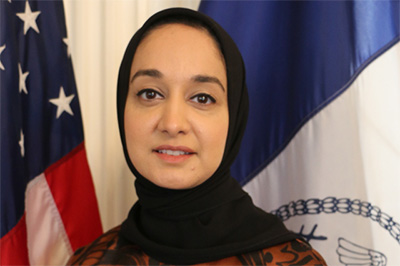
Faiza N. Ali

Faiza N. Ali

Commissioner, New York City Mayor's Office of Immigrant Affairs

Faiza N. Ali has served New Yorkers for nearly two decades as an institutional and civic leader focused on advancing equity, civil rights, and democratic engagement. Drawing on her years of movement building, she brings sharp political discernment and a commitment to furthering justice to her work.

As first deputy chief of staff, Faiza drove institutional decision-making and priority-setting at the New York City Council, keeping the body grounded in its core public-service mission. She played a pivotal role in shaping and steering high-stakes, high-level negotiations across city government, including major land-use and planning matters, and the city budget. Faiza provided strategic guidance to Council leadership and senior staff, anchoring the Council’s agenda in the lived experiences of those most impacted by city policy. Her tenure was defined by a balanced, principled style of problem-solving, a talent for bringing diverse stakeholders into alignment, and a signature approach that blends political savvy with unwavering integrity.

Before assuming her current role, Faiza rose through the Council’s Community Engagement Division, where she led citywide initiatives, strengthened community partnerships, and coordinated major public-safety and youth-services efforts. She ensured the Speaker’s Office remained responsive to the needs and perspectives of all New Yorkers, reflective of her firm belief in people’s power to define their own path and create the futures they envision for themselves.

Earlier in her career, she served as director of advocacy at the Arab American Association of New York, an organizer with Brooklyn Congregations United, and director of Community Affairs at CAIR-NY. Across these roles, she built campaigns on policing, immigration reform, civil rights, and democratic participation, recruited and mentored emerging organizers, and established coalitions that continue to influence the city’s civic landscape.

Faiza holds a B.A. in political science from Pace University. The daughter of immigrant parents from Azad Kashmir, Pakistan, she is proud to have forged a career in service that is rooted in her family’s dedication to compassion and collective care.
Read More
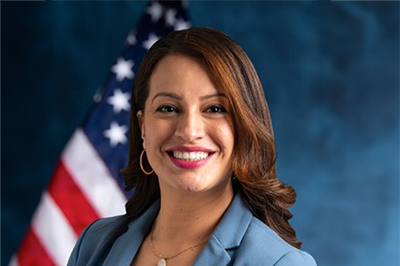
Catalina Cruz

Catalina Cruz

Assemblymember, District 39, New York State Assembly

Catalina Cruz was born in Colombia and came to Queens at nine. She grew up as a DREAMer, living in the United States for more than ten years as an undocumented American. Cruz was raised by a single mother who, like many immigrants, had to work multiple and menial jobs to support her family. Inspired by her mother’s perseverance, Cruz has committed her career to fighting for our community to ensure our workers, neighbors, and families not only survive but thrive.

Cruz is an experienced attorney and a leader in tenant protection, immigration reform, and workers’ rights. Prior to becoming the assemblywoman for the 39th District, she practiced housing law. She served in various positions in city and state government, including chief of staff to former Council Member Julissa Ferreras-Copeland, counsel to the City Council’s Committee on Immigration, and director of the Governor’s Exploited Workers Task Force, among others. In these positions, she represented tenants in housing court, drafted legislation, and implemented initiatives to support women, protect workers, and champion small businesses.

Since taking office in 2019, Cruz has passed more than 24 new laws to combat food insecurity, curtail the high cost of healthcare, protect aging New Yorkers, and so much more. Cruz’s district office places a strong emphasis on constituent services. Her hardworking staff is proud to have helped thousands of constituents access legal services, small business support, unemployment insurance, health insurance, and pandemic assistance, as well as help with mortgage, rent, and utility payments.

Cruz lives in Jackson Heights, Queens. She holds a bachelor’s degree from the John Jay College of Criminal Justice and a juris doctor from the City University of New York’s School of Law and is admitted to practice law in the State of New York.

Read More

Panelists

Mary Jo Dudley

Mary Jo Dudley

Director of Migrant Advocacy and Support (MAS), Center for Transformative Action

Mary Jo Dudley is the director of Migrant Advocacy and Support (MAS), a project of the Center for Transformative Action dedicated to advancing justice, dignity, and equity by partnering with migrants to address migrant-identified health, legal, and educational priorities. MAS is grounded in community co-creation, cultivating trusted spaces where migrants surface emerging concerns, set priorities, and collaborate in developing practical tools, workshops, and mutual aid strategies that help families prepare for challenges with potentially long-term consequences.

Mary Jo also serves as chair of the National Advisory Council on Migrant Health, a 15-member body that advises the Secretary of the US Department of Health and Human Services and the Health Resources and Services Administration on improving the health and well-being of farmworkers and their families nationwide.

Previously, she directed the Cornell Farmworker Program for more than 20 years, working to strengthen farmworkers’ living and working conditions. Centering farmworker perspectives, she helped develop accessible educational resources—including workshops and short animated videos—focused on health, workplace safety, cultural concerns, and immigration issues.

In close collaboration with farmworkers, Mary Jo co-created Spanish-language skits, role-plays, and videos explaining legal rights and how to respond during encounters with law enforcement. Through bilingual workshops, she assisted hundreds of families in preparing power-of-attorney and temporary guardianship documents to ensure children would be protected if parents were detained. She has also supported hundreds of families in completing parental permission-to-travel forms, enabling parents or designated adults to safely transport minors across international borders.

Her work has received national recognition. In 2019, she received the W.K. Kellogg Foundation Community Engagement Scholarship Award (Regional) and the Association of Public and Land-grant Universities C. Peter Magrath Community Engagement Scholarship Award, a national honor recognizing exemplary engaged scholarship. In 2012, she was named a White House Champion of Change and received the César Chávez Legacy Award from President Barack Obama.

Locally, she received the 2026 Women of Distinction Award, the 2025 Friend of Labor Award from the Tompkins County Workers’ Center and multiple honors from Cornell University, including the 2022 College of Agriculture and Life Sciences Individual Extension Outreach Award, the 2015 George D. Levy Engaged Teaching and Research Award, the 2013 Cornell Engaged Learning/Research Faculty Fellowship, the 2010 Perkins Prize for Interracial Understanding and Harmony, and the 2010 Kaplan Family Distinguished Faculty Fellow in Service-Learning Award.

Read More
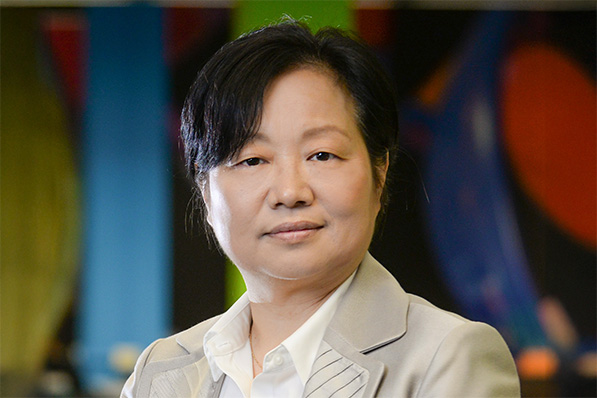
Wooksoo Kim

Wooksoo Kim

Director, Immigrant and Refugee Research Institute (IRRI)

Dr. Wooksoo Kim is the director of the Immigrant and Refugee Research Institute (IRRI) at the University at Buffalo, which she co-founded in 2014. Through IRRI, Kim has been developing a network of researchers who are committed to creating and disseminating practical knowledge to improve the lives of immigrants and refugees. She prioritizes mutually beneficial collaborations between university-based academic researchers and immigrant and refugee communities in her work.

As a social work researcher, Kim aims to improve the well-being of immigrant and refugee populations in the US. She uses a community-based participatory research approach to gain a deeper understanding of the needs of these populations and design culturally responsive interventions to address those needs.

In addition to her research, Kim also brings a community-focused approach to her teaching.  She uses a service-learning model, allowing her students to gain hands-on learning experience in research methods while providing much-needed program evaluations to local social service programs and agencies.

Kim’s earlier work has explored a range of issues impacting Asian immigrants, such as mental health, alcohol use, and gambling. More recently, she conducted a series of surveys focusing on the needs of refugee populations in Western New York, and based on the results, she is exploring interventions that utilize the available cutting-edge technologies, such as virtual reality (VR) and artificial intelligence (AI), to address many challenges faced by refugee populations and provide opportunities for them to learn such technologies to improve their lives in their new home.

Read More
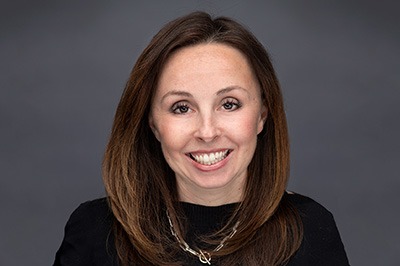
Jennifer Rizzo-Choi

Jennifer Rizzo-Choi

A recent board member of the International Institute of Buffalo and experienced nonprofit leader, Jennifer Rizzo-Choi currently serves as the International Institute of Buffalo’s executive director. She has more than a decade in law, public policy, media, refugee resettlement and immigration services, and nonprofit management. She previously served as legal director for Journey’s End in Buffalo. Drawing on her legal education and a decade of experience in journalism and media on assignments across the US and Europe, she launched the organization’s legal aid program, raising over $1 million from new grant lines, establishing a walk-in clinic, and hiring and leading a team that handled over 500 immigration legal cases each year. She then left Western New York to join Human Rights First in Washington, DC, where she developed and led a national pro-bono program to expand legal representation for immigrants around the country, working closely with the Obama White House and establishing field offices and coalitions in Texas, Louisiana, and Georgia. She then served as executive director of The Pro Bono Project in New Orleans, the state’s largest pro-bono legal services organization, where she successfully rehabilitated the organization’s brand and finances and leveraged relationships with area law firms. She left to pursue her passion for nonprofit leadership, earning an MBA at MIT’s Sloan School of Management and ultimately returning to Western New York, where she became a member of the Board of Directors of the Ronald McDonald House Charities of Western New York and joined the board at the International Institute, recently completing a five-year term.

Read More
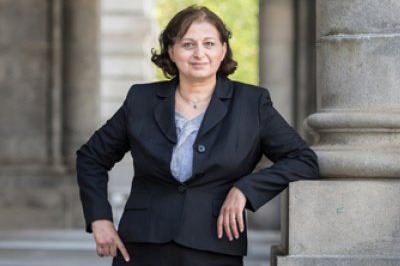
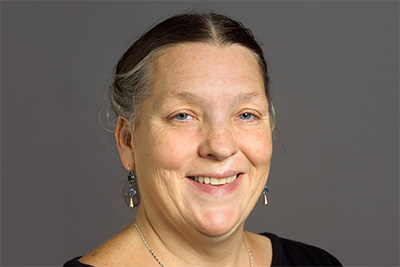
Dina Refki

Dina Refki

Executive Director, Institute on Immigrant Integration Research and Policy

Dina Refki is the director of the Center for Women in Government & Civil Society (CWGCS) at the University at Albany. Refki studies and researches the interplay of gender with institutional structures in the US and international context. She applies gender mainstreaming and budgeting analysis from transnational perspectives. Prior to assuming leadership at CWGCS in 2009, she held different positions at the Center, including as director of the Immigrant Women & State Policy Program, which facilitated interagency collaboration, promoted dialogues with civil society and immigrant women at the state level, and worked to identify and address barriers to the integration of immigrant women in the social, economic, and political fabric of local communities. Refki studies the challenges of migration, the barriers facing immigrant women and their families, and the structural changes needed to better respond to the needs of immigrant women.

Read More